
How GS1 Standards Improve AI Search Product Discovery
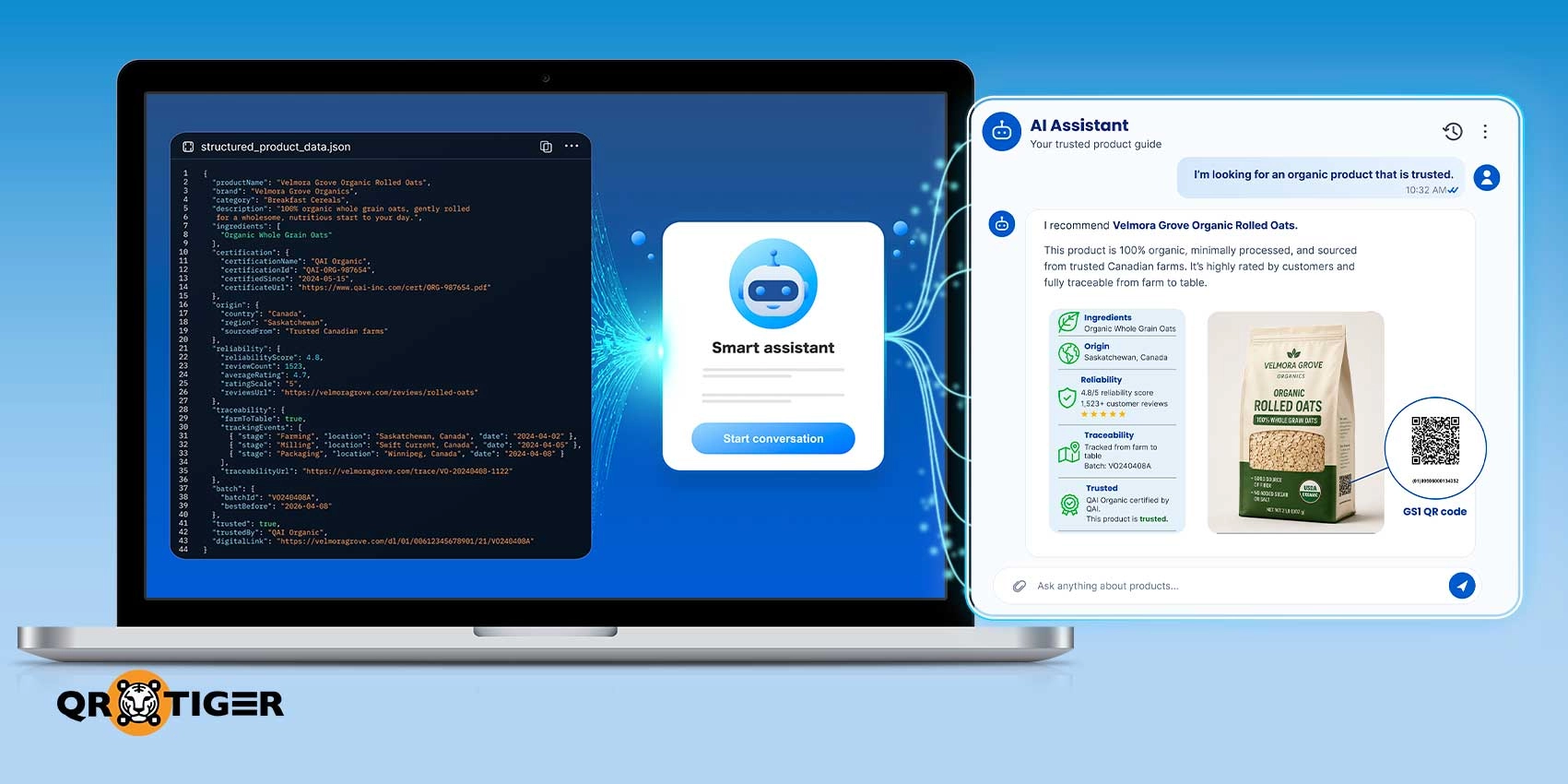
AI search product discovery draws on product information from across the Internet, including structured, machine-readable data, to identify, interpret, connect, and compare products.
For AI systems to provide useful product recommendations, however, they need reliable information about what each product is, what attributes it has, and how information from different sources relates to the same product.
GS1 standards provide the standardized identity and data-sharing foundation that helps businesses maintain consistent product information across digital channels.
Businesses that build a strong, standardized product identity and publish complete, structured, current, and accessible data help AI confidently compare products and provide trustworthy information to consumers.
Important: GS1 standards don't directly optimize a product for AI ranking. They provide a standardized product identity and data foundation that AI and other digital systems can use to identify, connect, and interpret product information.
Quick summary
|
Table of Contents
- How is AI changing the product discovery process?
- Where does AI get product information?
- Why is inconsistent product data a problem?
- How GS1 standards support trustworthy product data for AI
- How to prepare your products for AI-driven discovery
- Frequently asked questions about AI Search and GS1 Standards
- Final considerations
- Key terms to know
How is AI changing the product discovery process?
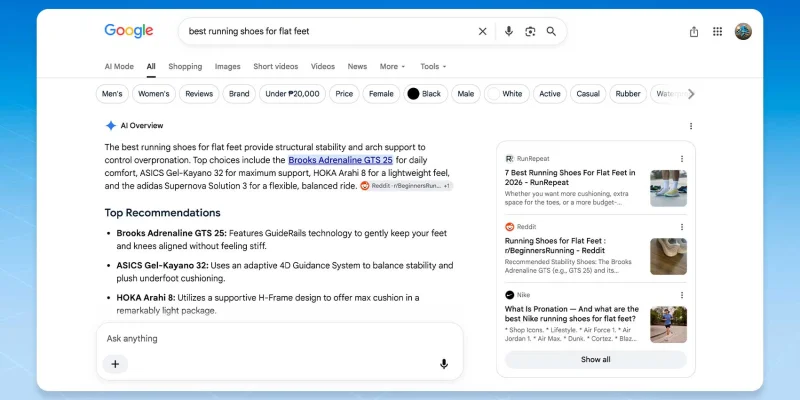
Artificial Intelligence (AI) is accelerating product discovery by reducing the amount of manual research shoppers need to do.
AI assistant tools like Amazon Rufus are helping customers make purchase decisions the same way by answering product-related questions directly without them leaving the e-commerce platform.
Traditional search optimization remains relevant, but it does not guarantee that a product will be surfaced in an AI-generated response. AI systems use their own retrieval, ranking, and recommendation processes to determine which information they surface.
One important factor businesses must keep in mind regarding AI search visibility is the structure, topical relevance, and quality of the data.
Where does AI get product information?
AI systems can obtain product information from multiple public and authorized data sources across the web, depending on how the system is built and what information it can access.
Instead of relying on a single website, AI systems can retrieve, compare, and synthesize information from multiple sources to generate a response that matches the user's query.
- Brand or manufacturer's official product information: AI can refer to product pages, specifications, FAQs, manuals, knowledge bases, and other publicly available content to understand what a product is, how it works, and who it is for.
- Structured product data: Consistent, organized product data can give AI systems clearer information to interpret across platforms.
- Third-party sources: AI compares information from online marketplaces, retailer catalogs, review websites, industry publications, and news articles to validate and enrich its understanding of a product.
- Customer reviews and discussions: AI analyzes them to identify common product strengths and weaknesses, as well as real-world use cases. Their influence can vary depending on the AI system, retrieval process, and source quality.
Why is inconsistent product data a problem?
Inconsistent or outdated product data confuses AI systems, resulting in inaccurate recommendations, reduced product visibility, and poorer consumer decisions.
When the same product has different names, specifications, prices, or identifiers across websites, AI systems make mistakes as they struggle to determine which information is correct.
Common examples of inconsistent product data include:
- Different product names for the same item across channels
- Missing or incorrect GTINs or other product identifiers
- Outdated prices or stock availability
- Conflicting product specifications or dimensions
- Inconsistent images, descriptions, or attributes
- Different units of measurement or formatting
For businesses, these inconsistencies can make products harder for AI-powered search and shopping systems to identify and compare accurately.
For consumers, conflicting product information can make it harder to compare options, verify compatibility, or make informed purchasing decisions. This can reduce trust in the product or brand and increase the likelihood of abandoning a purchase.
How GS1 standards support trustworthy product data for AI
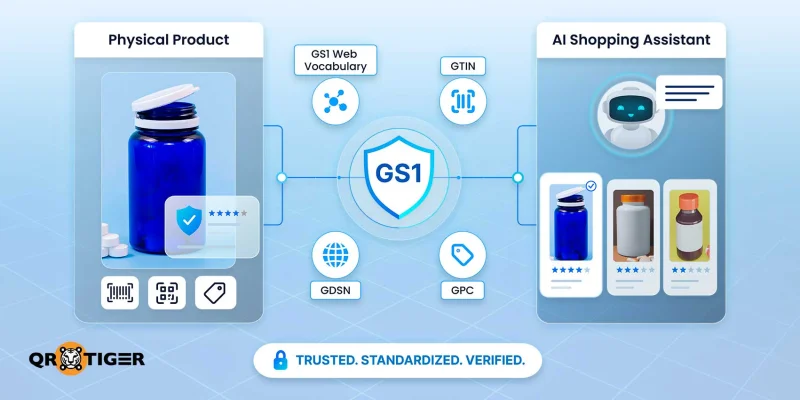
GS1 Standards provide a globally recognized framework for identifying, capturing, and sharing product information consistently across the supply chain and digital platforms.
They do not function as an AI ranking factor. Instead, they help create the data foundation that digital systems can use to understand products more consistently.
Several GS1 standards and services contribute to this foundation.
GTIN establishes a consistent product identity
A GTIN provides a globally unique identifier for a trade item. Instead of relying solely on a product name—which can vary across retailers or regions—digital systems can use the GTIN as a standardized reference to distinguish products and link related records.
GS1 also has Verified by GS1, which provides access to certain company and product information associated with GTINs.
According to the GS1 organization, the product information can include attributes such as brand name, product description, product category, product image URL, net content, unit of measure, country of sale, and links to other data sources.
GS1 Digital Link connects product identity to online information
The GS1 Digital Link connects a GTIN to online resources through a standardized web URI. Those resources can provide product information such as ingredients or materials, nutritional information, certifications, user instructions, and other relevant details.
A GS1-compliant resolver can connect one GS1-identified product to multiple relevant human- or machine-readable resources, rather than forcing everything into a single location.
GDSN supports synchronized product information
GS1 data-sharing systems, such as the Global Data Synchronization Network (GDSN), enable businesses to exchange consistent product attributes.
GDSN is primarily a business-to-business data-sharing infrastructure rather than an AI search engine. However, it helps establish more consistent product information upstream.
Supports more reliable product information for AI
GS1 Digital Link does not automatically make product information discoverable by AI. For AI and search systems to use those resources, the destination information generally needs to be accessible to the relevant system and presented in formats it can retrieve and interpret.
Consistent product identity and structured product information give AI systems a stronger foundation for interpreting and comparing products.
For example, a manufacturer has a GTIN and puts a GS1 Digital Link QR Code on its packaging.
When the Digital Link leads to a public product page containing well-structured product information, images, specifications, and structured data, the information has a much better chance of being discovered and interpreted by search and AI systems.
Visual Framework GTIN Identifies the product ↓ GS1 standards Standardize product information ↓ GS1 Digital Link Connects product identity to online resources ↓ Structured, current product information Makes product details easier to retrieve and interpret ↓ AI/search systems Retrieve, compare, and synthesize product information ↓ Consumer Receives more relevant product information |
How to prepare your products for AI-driven discovery
Accurate, complete, structured, and consistent product data gives AI systems clearer information to interpret and process.
Establish the product identity
Start with a valid product identifier such as a GTIN. Maintain accurate information associated with that identifier, including:
- Brand
- Manufacturer or brand owner
- Product name
- Product category
- Product variant
- Relevant market or country information
Businesses can also use the Global Product Classification (GPC) to classify products consistently across standardized categories.
While a GTIN identifies a specific trade item, GPC provides a standardized way to categorize products. Both can give digital systems clearer information about both which product is being described and what type of product it is.
The goal is to make it clear which product the information describes and where it belongs within the relevant product category. A standardized identifier is especially useful when the same product appears across multiple websites and distribution channels.
Complete the product attributes
AI may answer very specific questions, which is why product attributes matter more than ever. Product attributes are the specific characteristics that clearly define a product.
Businesses should maintain attributes relevant to their product category and customer use cases, following the GS1 Web Vocabulary.
This might include colors, sizes, age, expiration dates, identifiers, compatibility–anything that can guide AI systems to make accurate comparisons and recommendations.
If attributes are missing, outdated, or inconsistent, an AI system may not have enough reliable information to answer accurately.
Use structured data
Structured data gives machines explicit information about the entities and attributes represented on a webpage.
Schema.org provides a shared vocabulary for describing entities such as products, offers, organizations, and reviews.
JSON-LD (JavaScript Object Notation for Linked Data) is one format that can be used to embed structured data in webpages.
For product pages, relevant structured data can include:
- Product: Product name, brand, image, SKU, GTIN, and other product properties
- Offer: Price, currency, availability, and purchase-related information
- AggregateRating: Aggregate customer ratings where applicable
- Review: Individual reviews that are eligible and appropriately implemented
Structured data does not guarantee that an AI system will use or display the information.
However, it provides explicit, machine-readable context that can help search engines and other systems interpret a webpage's content.
Keep product information consistent
Consistency reduces ambiguity and makes it easier for systems to connect product records.
Businesses should audit product information across:
- Official websites
- Retailer listings
- Marketplaces
- Product catalogs
- Distributor databases
- Digital product pages
- Other relevant online sources
They should check for discrepancies in:
- Product names
- GTINs
- Specifications
- Dimensions
- Units
- Images
- Descriptions
- Pricing
- Availability
- Product variants
Publish authoritative information
GS1 isn't the source of all product information AI uses. Businesses should maintain an authoritative source for their product information.
For AI-driven product discovery, the official product page should contain accurate and complete information that corresponds to the actual product.
Other sources can provide additional context, but businesses should avoid allowing outdated or contradictory information to remain unaddressed across their digital channels.
Relevant sources may include:
- Official brand websites
- GS1 data sources and registries
- Retail listings
- Distributor catalogs
- Certification databases
- Industry publications
- Product documentation
The objective is not simply to have as many sources as possible. It is to ensure that the information across relevant sources is consistent, traceable, and trustworthy.
Keep product data current
Product information changes. Prices, availability, packaging, specifications, certifications, and product status can change over time.
Businesses should establish processes for updating product information across their relevant systems and channels.
This is especially important for AI-driven product discovery because an AI system may retrieve information that was published previously but is no longer accurate.
A product that has been discontinued, replaced, repriced, or modified should not continue to be represented online with outdated information.
Make connected resources accessible
Standardized product data only helps if the relevant systems can access it.
When using GS1 Digital Link, the connected resources should be properly maintained and made accessible to the digital systems that need to retrieve them.
This can include:
- Public product webpages
- Structured data
- APIs
- Digital documents
- Other machine-readable resources
Businesses should also ensure that their important product pages are technically accessible to the search engines and digital systems they want to reach.
Frequently asked questions about AI Search and GS1 Standards
Can structured data help AI recommend products?
Yes. Structured data can help search engines and other digital systems, like AI, interpret product details, such as names, prices, specifications, availability, and reviews in a consistent format.
It makes it easier for AI systems to identify, compare, and accurately recommend products that match a user's query while reducing confusion caused by incomplete or inconsistent information.
Can GS1 compliance make a product easy to discover in AI?
GS1 compliance does not automatically make a product discoverable by ChatGPT, Google, Gemini, or another AI system. It still needs a way to discover, retrieve, and interpret the information.
Does a GTIN help AI identify products?
A GTIN provides a standardized product identity that digital systems, including AI systems, can use to distinguish a trade item and connect related product information. However, a GTIN alone does not provide all product details; businesses should associate it with accurate, standardized product attributes and supporting information.
How does GS1 Digital Link support product discovery?
GS1 Digital Link connects a product’s GTIN to online information through a web-resolvable link. This gives businesses a standardized way to link products to information such as specifications, instructions, certifications, sustainability data, and traceability details.
What is the difference between GTIN and GS1 Digital Link?
A GTIN is a unique identifier for a specific trade item, while GS1 Digital Link provides a standardized web-based way to connect that identifier to online product information.
Does GS1 replace Schema.org structured data?
No. GS1 standards and Schema.org structured data serve different but complementary purposes. GS1 standards provide standardized product identification and data relationships, while Schema.org helps search engines understand and classify information published on webpages.
Businesses can use both GS1 identifiers and Digital Link for consistent product identity and connectivity, alongside Schema.org markup to communicate product details to search engines and other systems.
What product data should businesses standardize for AI search?
Businesses should standardize the product information AI systems need to accurately identify, understand, compare, and recommend products. This includes the GTIN, brand, manufacturer, product name, category, attributes, variants, availability, pricing, images, and descriptions.
Final considerations
AI search for product discovery is changing how people find, understand, trust, and decide on products. If AI assistants can’t understand your product information, they may never recommend it. It can also make mistakes. It can produce answers based on inaccurate data.
It is therefore important that businesses retain control over how their product information is identified, structured, and shared across digital channels.
Accurate, consistent, and standardized product data not only improves the customer experience but also helps AI systems interpret products with greater confidence.
GS1 doesn't automatically make a product visible in AI search, but it provides businesses with a standardized foundation for consistently identifying and describing products across digital channels.
When that foundation is combined with complete attributes, structured web data, authoritative sources, and accessible product information, AI systems have better-quality information to retrieve, interpret, and compare.
Want to connect your products to digital information with GS1 Digital Link? Learn how QR TIGER can help you create GS1 Digital Link QR codes for your products.
Key terms to know
- GS1 Web Vocabulary – A standardized vocabulary that helps businesses describe a product and its attributes in a structured format for platforms, search engines, and AI systems to understand.
- GTIN (Global Trade Item Number) – A unique identifier that is assigned to products. It distinguishes one product from another across marketplaces, retailers, and other platforms.
- GDSN (Global Data Synchronization Network) – A global network that lets trading partners exchange and synchronize trusted product information from a single source.
- GPC (Global Product Classification) – A standardized classification system that groups products into categories, making it easier for businesses and AI systems to organize.
- Structured Product Data – The product’s information that is organized in a machine-readable format to allow AI systems to accurately interpret, compare, and recommend products.
- Machine-Readable Data – Information that is formatted so that computers and systems can process without the need to interpret human-written text.